
Banner 1

Shadow Judging

Ever watched a battle and thought, 'I would’ve voted the other way'? Could you explain why?

Shadow judging bridges the gap between watching a battle from the crowd and evaluating it from the judging panel—helping develop fairer battles, clearer communication, and a stronger dance culture.

What is Shadow Judging?

Shadow judging is a structured, real-time way to practise evaluating competitive dance battles under genuine event conditions:
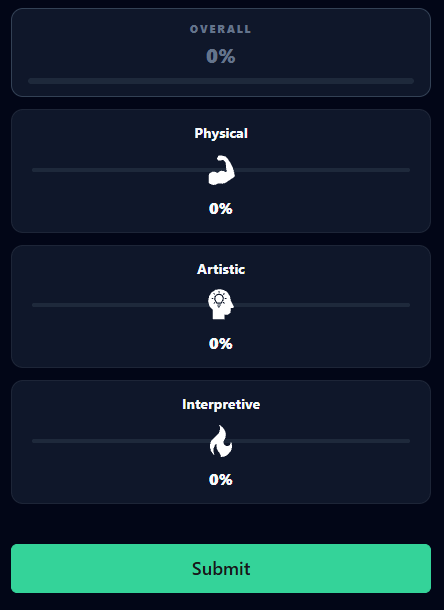
  • Same tools and method: You judge the exact same battle using the same interface (such as Threefold) and evaluation framework used at major competitions.
  • Real-time decision-making: Rather than casually watching from the audience, you sit in the "hot seat" and submit your decision on time under live competition pressure.
  • Zero impact on official results: Your vote is recorded purely for practice and review—it does not count toward or affect the official outcome of the battle.
  • In-person or online: You can shadow judge live at an event alongside the official panel or remotely while watching a livestream.
image

Evaluating live rounds in real time using the Threefold interface

Why Shadow Judging Matters for Judges

Judging is a skill, not just a status
Being a great dancer or winning battles does not automatically make someone a great judge. Adjudication is a separate craft that must be practised and honed.
Uncovering blind spots and biases
Everyone has unconscious preferences. Shadow judging helps developing judges spot habits they might not realise they have—such as favouring specific styles, overvaluing big tricks, or getting swayed by crowd noise.
Handling cognitive load under pressure
Live battles are loud, fast, and intense. Practising in real time trains your brain to filter out external distractions and make rational, consistent calls within seconds.

Dancer A vs. Dancer B

Say you vote for Dancer A, while the official panel votes for Dancer B. The most useful question isn't just whether you matched the panel—it is how you reached your decision.

Turning Decisions into a Learning Opportunity

Reviewing your votes with an experienced judge turns every battle into structured learning:

  • Examine your reasoning: Look closely at what you noticed, what you missed, and how you applied the judging framework, rather than simply trying to copy the panel.
  • Create a safe feedback loop: Comparing shadow votes with the official panel opens up constructive discussions about why two judges saw a round differently.
  • Align on shared terminology: Debriefing helps judges build a clear, consistent vocabulary so they can explain their decisions transparently.

Why It Matters Beyond the Judging Panel

Shadow judging isn't only for aspiring judges - it can benefit everyone involved in the scene:

Brings the community into the process
Dancers, coaches, parents, and fans can explore first-hand how judging decisions are actually made.
Develops more conscious dancers
Understanding what judges evaluate helps dancers and coaches prepare for battles with greater clarity and intention.
Shifts from "win or lose" to "win or learn"
When the reasoning behind a close battle is transparent, every round becomes an opportunity to learn and grow.

Frequently Asked Questions

No. Shadow judges evaluate the exact same rounds in real time, but their votes never count toward the official outcome. This creates a low-stakes environment to test and refine your decision-making.

Not necessarily. While you can shadow judge live at an event alongside the official panel, you can also shadow judge remotely over a livestream using the same interface and time limits.

No. Matching the panel is not the main objective—understanding how you reached your decision is. Reviewing differences in a debrief helps you examine your reasoning, spot blind spots, and apply the judging framework consistently rather than simply copying other judges.

Shadow judging uses the same structured tools used at major competitions, such as the Threefold interface, which compares dancers across Physical (Body), Artistic (Mind), and Interpretive (Soul) qualities.

Yes. Shadow judging is valuable for anyone who wants to understand how competitive battles are evaluated. For dancers and coaches, it encourages a win or learn mindset and deeper awareness of what judges look for on the floor.

No. While deep knowledge of the dance is essential, judging is a distinct skill built on bias awareness, consistency, and clear decision-making under pressure. Shadow judging provides a practical way to develop and demonstrate those skills.

Register for Shadow Judging

Join the DAN Shadow Judging WhatsApp Community to get schedules for upcoming live and livestreamed practice sessions, debrief with experienced adjudicators, and sharpen your eye using the Threefold framework. Complete our quick opt-in form to get your private invite link to the DAN Shadow Judging WhatsApp Community.

Join the Shadow Judging Community